
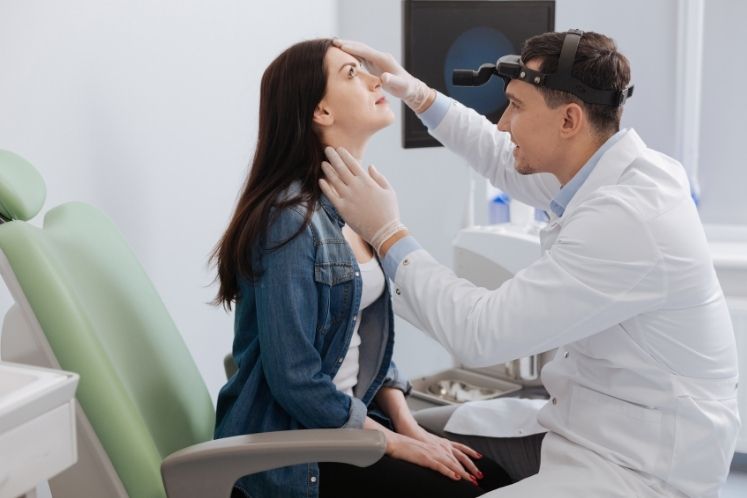
Many patients find themselves suffering from chronic sinus pressure, congestion, infections, and difficulty breathing without realizing a simple procedure can clear blocked nasal drainage pathways. Dr. Daniel Slaughter, Dr. Ryan Salvador, and Dr. Mac Ojeaga at Sinus & Snoring Specialists offer balloon sinuplasty in Austin, TX as a minimally invasive way to restore drainage while preserving normal sinus anatomy. The procedure is designed with patient comfort in mind, and knowing what to expect before, during, and after often makes balloon sinuplasty an easy choice.
What Questions Should You Bring to a Balloon Sinuplasty Consultation?
A balloon sinuplasty consultation should help determine why sinus symptoms keep returning, not simply whether a procedure can be performed. Sinus pressure and congestion can have several contributing causes, so the evaluation may include an examination of your sinus drainage pathways, inflammation, nasal structures, and overall airway function. In-office CT imaging and nasal endoscopy can also help identify concerns such as narrowed drainage pathways, a deviated septum, enlarged turbinates, or nasal polyps.
Helpful questions to discuss include:
- What appears to be causing my recurring sinus symptoms?
- Am I a candidate for balloon sinuplasty alone?
- Would another procedure need to be performed at the same time?
- How will CT guidance be used during my treatment?
- What should I expect from sedation and recovery?
You should also discuss previous sinus treatments, medications, imaging, and ongoing symptoms. A detailed evaluation helps create a treatment plan based on the actual anatomy involved rather than using the same approach for every patient.
How Does a Balloon Sinuplasty Work?
Balloon sinuplasty works by widening a blocked natural sinus opening without removing the surrounding sinus tissue. At Sinus & Snoring Specialists, the procedure is performed in an office procedure suite using local anesthesia and IV sedation administered by a board-certified anesthesiologist. This allows you to remain comfortable while your sinus pathways are treated.
The procedure generally involves:
- Guiding a small balloon toward the blocked sinus opening
- Using a tiny endoscope and 3D CT-guided navigation for precise placement
- Carefully inflating the balloon to widen the drainage pathway
- Restoring space for improved sinus drainage and ventilation
- Removing the balloon without leaving an implant behind
Our team uses Fiagon 3D computer-assisted navigation to help guide treatment through delicate sinus anatomy. When needed, balloon sinuplasty may also be combined with procedures that address a deviated septum, swollen turbinates, or nasal polyps so multiple sources of obstruction can be treated together.
How Much Downtime Is Required After Balloon Sinuplasty?
Balloon sinuplasty is designed to create less disruption than traditional sinus surgery because it does not require incisions, sutures, tissue removal, packing, or permanent material inside the nose. Most patients can return to work the following day and generally do not require prescription pain medication. Some temporary nasal symptoms can still occur as the sinuses adjust after treatment.
Early recovery may involve:
- Mild congestion
- Temporary sinus drainage
- Mild pressure or sensitivity
- A cold-like feeling for several days
- Follow-up care to monitor healing
Because there is no surgical wound from sinus tissue removal, you will generally experience less bleeding and postoperative discomfort than you might expect from more invasive sinus surgery. Recovery can vary when balloon sinuplasty is combined with additional nasal procedures, so individual instructions should always guide your return to work and normal activity. Most patients feel up to working the next day.
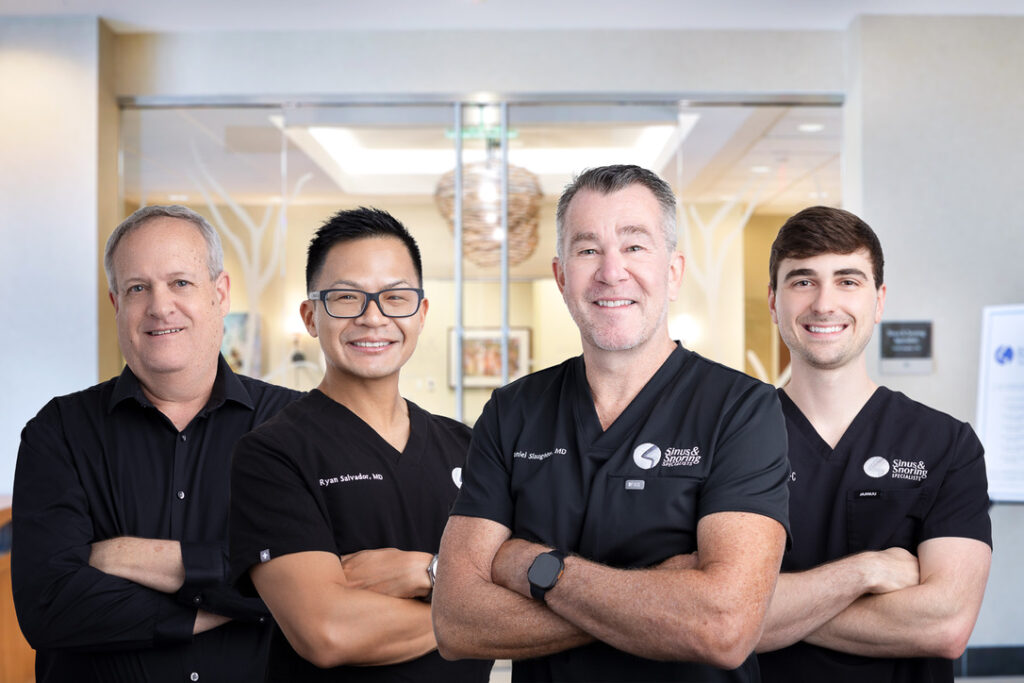
Meet Our Physicians
Double Board-Certified Specialists
At Sinus & Snoring Specialists, our clinic brings together a dedicated Sinus & Nasal Center, Snoring & Sleep Apnea Center, Allergy Testing & Treatment Center, and Ear & Hearing Care services—all under one roof. Sinus & Snoring Specialists works very hard to provide one center that has everything needed for a full evaluation and treatment in one location.
How Long Do Balloon Sinuplasty Results Last?
Balloon sinuplasty is intended to create long-term improvement by remodeling narrowed sinus drainage pathways so the sinuses can drain and ventilate more normally. You may experience improved breathing, reduced pressure and congestion, fewer recurring sinus infections, and less reliance on repeated antibiotics or steroids.
Long-term results can be influenced by:
- The underlying reason for sinus blockage
- The severity of chronic inflammation
- Structural concerns elsewhere in the nasal airway
- Allergies or other ongoing contributors
- Whether additional procedures are needed
Balloon sinuplasty doesn’t have a single expiration date. The goal is lasting functional improvement, but some patients need treatment for other contributing conditions to maintain the best possible sinus health over time.
Schedule a Balloon Sinuplasty Consultation in Austin Today
Dr. Slaughter, Dr. Salvador, and Dr. Ojeaga bring extensive sinus expertise, advanced image-guided techniques, and a minimally invasive approach to balloon sinuplasty at Sinus & Snoring Specialists in Austin, TX. Ready to find out whether balloon sinuplasty could improve chronic sinus pressure, infections, or nasal breathing? Schedule a consultation with Sinus & Snoring Specialists today.