
Endoscopic Septoplasty in Austin, TX
What Is a Septoplasty?
The septum is the divider between the right and left sides of the nose. When the septum becomes significantly bent or crooked, it can result in a deviated septum that leads to nasal obstruction, congestion, and difficulty breathing through one or both sides of the nose. Septoplasty is a surgical procedure used to correct this condition and restore better airflow through both nasal passages. With modern techniques, this can be accomplished through endoscopic septoplasty using a very small internal incision, allowing surgeons to precisely straighten the bone and cartilage within the nasal septum.
You may have heard friends or coworkers describe how difficult their septoplasty procedure was and how much pain they experienced. Unfortunately, many ENT surgeons still use older techniques that involve more tissue disruption and a longer recovery. Dr. Daniel Slaughter, however, pioneered a modern, minimally invasive technique that allows the septum to be corrected through a small internal incision, with no packing, no splints, no bruising, and no plastic or gauze in the nose. Unlike traditional methods, this updated technique avoids unnecessary trauma to the internal structures of the nose. In most cases, patients are able to breathe better immediately, experience less bleeding, and enjoy a more comfortable recovery. Many patients also notice immediate improvements in breathing difficulties, noisy breathing, and symptoms related to sleep apnea or chronic sinus infections caused by a deviated nasal septum.
Quick Links
- Is The Septoplasty Procedure Painful?
- Why Choose Sinus And Snoring Specialists For Septoplasty?
- What Are The Risks Of Deviated Septum Surgery?
- Can A Deviated Septum Be Repaired Non-Surgically?
- Can Other Procedures Be Performed With Septoplasty?
- What Is Septum Surgery Recovery Like?
- Frequently Asked Questions
What Causes a Deviated Septum?
Any form of trauma to the nose, even a very minor bump during childhood, can result in a deviated septum. This can even occur as the result of an injury during birth. Because the nasal septum is an important structure made of bone and cartilage, even a minor impact can cause it to shift to one side, creating a crooked septum and leading to nasal obstruction, breathing problems, or chronic sinus infections. As such, a deviated septum is very common. However, it generally does not require treatment unless it causes symptoms.
A deviated nasal septum can narrow one or both nostrils, disrupt normal airflow, and force patients to breathe through their mouths, especially during sleep. Many patients also experience noisy breathing, chronic congestion, or recurring infections because the two nasal passages cannot function properly.
Our physicians explain what it means to have a deviated septum, why it matters, and how it is treated with modern endoscopic septoplasty, an in-office procedure performed under IV sedation. Unlike older methods used by some plastic surgeons and ENT providers, our physicians’ technique minimizes trauma to the tissue, reduces bleeding, and helps most patients experience improved breathing with far less discomfort.
What Are the Symptoms of a Deviated Septum?
Patients with a deviated septum often experience a range of symptoms related to blocked nasal passages and disrupted airflow. When the septum leans to one side, it can narrow one or both nostrils, leading to persistent nasal obstruction and breathing difficulties. Patients with a deviated septum typically complain of the following symptoms:
- Chronic congestion
- Nasal obstruction or difficulty breathing through one side of the nose
- Mouth breathing, especially during sleep
- Snoring or noisy breathing
- Sleep apnea or nighttime breathing difficulties
- Sinus infections or recurring infections
- Worsening congestion due to poor sinus drainage
A crooked septum can also cause breathing difficulties, reduced airflow, and a constant feeling of blockage that does not improve with nasal sprays or steroid nasal sprays. Because these symptoms affect how well patients can breathe, many eventually seek an evaluation to determine whether septoplasty may help improve breathing and restore better airflow.
Am I an Ideal Candidate for Deviated Septum Surgery?
Anyone who has persistent symptoms caused by a deviated septum and has not experienced relief with typical over-the-counter treatments, nasal sprays, or nasal steroids is an excellent candidate for septoplasty. Patients who struggle with nasal obstruction, breathing difficulties, congestion, or difficulty breathing through one or both sides of the nose often benefit from this surgical procedure.
You may be a strong candidate for septoplasty if you experience:
- Chronic nasal obstruction or blocked nasal passages
- Sleep apnea, snoring, or noisy breathing
- Frequent sinus infections
- Breathing difficulties that worsen during sleep or exercise
- A visibly crooked septum or crooked nose resulting from past trauma
- Difficulty getting adequate airflow through both nostrils
Ideal candidates are also individuals whose medical history supports undergoing IV sedation. For patients whose symptoms significantly affect their daily lives, our physicians may recommend septoplasty to improve breathing, restore better airflow, and help them breathe more easily.
How Is a Deviated Septum Diagnosed?
The diagnosis of a deviated septum is made using nasal endoscopy, which allows the surgeon to evaluate the nasal septum, nasal passages, and surrounding structures inside the nose. In our office, when a patient presents with congestion, nasal obstruction, sinus issues, or other symptoms related to breathing difficulties, a nasal endoscopy is performed to identify the cause. A high-definition camera connected to the nasal endoscope displays the inside of the nose on a monitor attached to the exam chair. The endoscope provides a painless evaluation with three-times magnification, making it possible to assess the septum, the turbinates, and the sinus outflow pathways.
This nasal endoscopy examination is frequently combined with a mini CT scan performed in our office. This imaging provides a comprehensive understanding of the nasal and sinus anatomy, including the bone and cartilage of the septum, both nasal passages, and any areas of blockage that may be causing sinus infections, breathing difficulties, or chronic nasal obstruction. Together, these tools allow our physicians to accurately diagnose the condition and determine whether septoplasty is recommended to improve breathing and help patients breathe more easily.
How Is Deviated Septum Surgery Performed?
In our clinic, septoplasty, the surgical correction of a deviated septum, is a simple outpatient procedure performed in our office under IV sedation. This modern approach to endoscopic septoplasty takes less than 15 minutes, requires no packing or splinting, and causes minimal bleeding or pain. Because the procedure does not alter the external appearance of the nose, most patients return to work the next day and feel comfortable resuming normal activities within a few days. Patients also look the same after the procedure because there is no change to the physical appearance of the nose.
The technique involves making a tiny incision inside the nose and elevating the lining off the thin, eggshell-like cartilage and bone that make up the nasal septum. Once the lining is lifted, the bone and cartilage are carefully reshaped to straighten the septum and restore better airflow through both nostrils. The lining is then repositioned and secured with a single dissolvable suture, allowing the tissue to heal naturally without the need for packing or splinting. Because this minimally invasive surgical procedure avoids unnecessary trauma to the structures inside the nose, patients typically experience less swelling, reduced discomfort, and a faster return to normal breathing.
How Common Is It to Have a Deviated Septum?
A deviated septum is very common. In fact, almost everyone has some degree of deviation of the nasal septum. In many cases, the deviation is mild and asymptomatic, causing no significant nasal obstruction, breathing difficulties, or sinus infections, and therefore requires no treatment. The severity of symptoms is not necessarily related to the degree of deviation, but rather to its location, the surrounding bony structures, and contributing factors such as allergies, sinus inflammation, or enlarged turbinates that further restrict airflow through both nasal passages.
Testimonials
Patient Finally Finds Relief
“I had septoplasty done with Dr. Slaughter a couple of months ago. It was the easiest and simply best experience ever. I was terrified as I had this done by another doctor. That doctor messed everything up, and I had to deal with it for years. Dr. Slaughter was to the point, and I trusted him. I’m so glad I did. It was the easiest surgery ever, and I didn’t have to wear splints or packing in my nose. The surgery center staff was beyond incredible too. Thank you all!”
Is The Septoplasty Procedure Painful?
Our technique for correcting a deviated septum involves a simple outpatient procedure performed in our office under IV sedation. The entire septoplasty usually takes less than 15 minutes and requires no packing, splinting, or bruising. Most patients return to work the next day and do not require pain medication afterward.
Why Should I Choose Sinus and Snoring Specialists to Perform My Septoplasty?
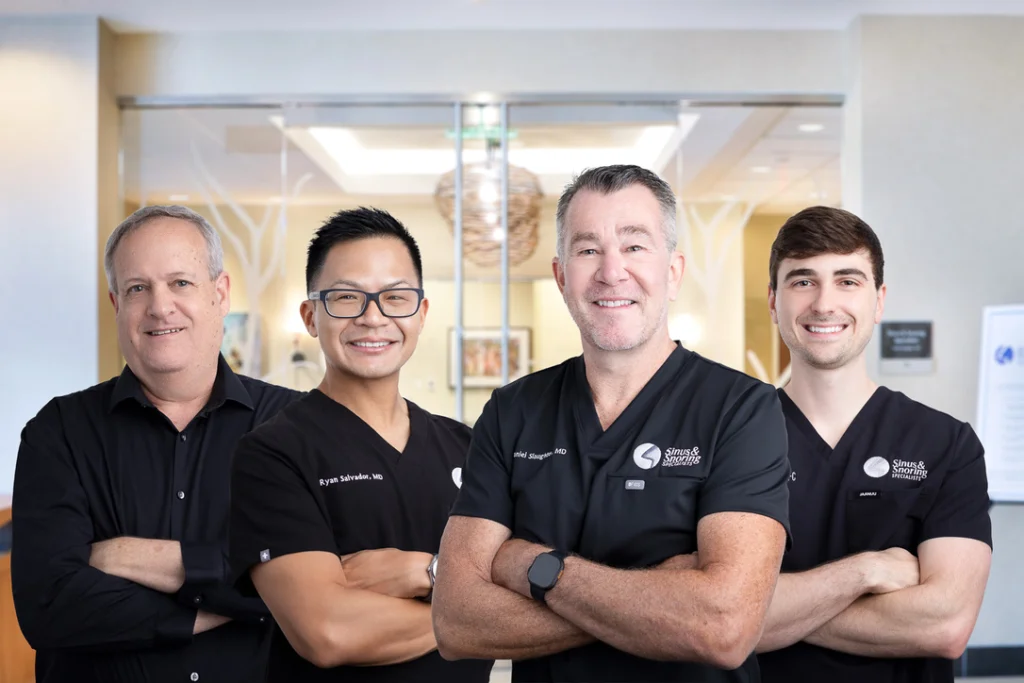
Traditional septoplasty performed by many ENT surgeons typically requires general anesthesia, nasal packing and splinting, greater postoperative discomfort, and a longer recovery period. Patients travel long distances to see our physicians because their advanced endoscopic septoplasty technique avoids unnecessary trauma to the tissues and structures inside the nose. This minimally invasive approach reduces risk, shortens recovery, and helps most patients breathe more easily almost immediately after the anesthesia has worn off.
What Are the Risks Associated with Deviated Septum Surgery?
Fortunately, septoplasty is a safe and straightforward procedure with a very high success rate and a very low risk of complications. Potential risks include minor scarring, bleeding, infection, the need for a revision procedure, or a small perforation in the nasal septum. These complications are uncommon, and our physicians’ modern technique minimizes trauma to the bone, cartilage, soft tissue, and nasal passages, further reducing these risks.
Can a Deviated Septum Be Repaired Non-Surgically?
No. A deviated septum cannot be corrected without surgery. Some practices promote a “balloon” septoplasty, but this technique simply displaces the septum temporarily to create minimal improvement in breathing and does not correct the underlying deviation. True correction requires septoplasty, which reshapes the nasal septum to restore natural airflow and relieve nasal obstruction.
Can Other Procedures Be Performed at the Same Time as a Septoplasty?
Very frequently, septoplasty is performed along with balloon sinuplasty and turbinate reduction. Adding balloon sinuplasty can further improve nasal breathing, reduce the risk of sinus infections, and relieve sinus pressure and headaches. Turbinate reduction can also further improve nasal breathing while reducing allergy symptoms such as postnasal drip.
Septum Surgery Recovery
Most patients can return to work the following day. Typically, patients can resume normal activities, including physical exercise, within one week. Patients often experience cold-like symptoms for approximately five days, including temporary congestion or nasal obstruction. The modern technique does not require packing or splinting and is virtually painless, with minimal bleeding and a fast recovery. Keeping the head elevated, avoiding strenuous activities, and following postoperative instructions can help ensure optimal healing and improved breathing within a few weeks.
Schedule a Consultation
If you are interested in a septoplasty and would like to learn more information, contact our Austin, TX office today at (512) 601-0303 to schedule a consultation with our ENT Specialists.
Austin, TX Endoscopic Septoplasty – FAQS
How do I know if my breathing issues are caused by a deviated septum or allergies?
Many patients experience breathing difficulties caused by both a deviated septum and allergies. A deviated septum typically causes nasal obstruction on one side, noisy breathing, or difficulty getting adequate airflow through one or both nostrils, while allergies cause swelling of the turbinates and the tissues inside the nose. A nasal endoscopy and mini CT scan help determine whether your symptoms are structural, allergy-related, or a combination of both.
Can a deviated septum cause sleep problems or nighttime congestion?
Yes. A crooked septum can significantly affect your sleep patterns, leading to sleep apnea, snoring, mouth-open breathing, and nighttime congestion. When the nasal passages narrow, airflow decreases, making it harder to breathe while lying down. Septoplasty can help restore better airflow and improve sleep quality for many patients.
How long does it take to breathe normally after septoplasty surgery?
Most patients notice improved airflow as soon as the anesthesia wears off, with continued improvement over the next few weeks. Because our physicians’ technique avoids packing and splinting, most patients are able to breathe comfortably right away. Mild swelling, congestion, or cold-like symptoms may last several days but do not typically interfere with normal breathing.
Is endoscopic septoplasty considered major surgery?
No. It is a minimally invasive outpatient procedure performed under IV sedation. The tiny incision inside the nostrils avoids external scarring and reduces trauma to the bone and cartilage of the nasal septum.
Can a deviated septum cause recurring sinus infections?
Yes. A deviated nasal septum can block the sinuses, restrict drainage, and increase the risk of sinus infections or chronic sinus infections. When airflow is limited through both nasal passages, mucus can build up, leading to pressure, headaches, and inflammation. Septoplasty can help reduce these episodes by improving sinus ventilation.
What should I avoid before deviated septum surgery?
Before septoplasty, patients should avoid aspirin, ibuprofen, and other medications that may increase the risk of bleeding. Your doctor may also recommend stopping certain medications or nasal sprays, avoiding smoking, and following any preoperative instructions provided before your procedure. These steps help reduce the risk of bleeding and support a smooth recovery.
Will septoplasty change the shape of my nose?
No. Septoplasty focuses on correcting the septum and improving airflow, not altering the external appearance of the nose. Because the procedure focuses on reshaping the internal structures inside the nasal cavity, the outside of the nose remains unchanged. Patients seeking cosmetic changes would need rhinoplasty.
Will I Have Any Visible Scarring After Treatment?
No. The procedure uses a very small incision inside the nose, resulting in no external scarring. Because the incision is hidden inside the nostrils, it is not visible during healing or afterward.