
Turbinate Reduction in Austin, TX
What Are Turbinates?
Turbinates, also called nasal turbinates, are the curved structures inside the nose that help filter, warm, and humidify the air we breathe as it moves through the nasal passages. These structures, especially the inferior turbinates, play an essential role in maintaining a moist environment and providing structural support within the nasal cavity. When turbinate enlargement occurs, the turbinate tissue can swell and lead to nasal obstruction, nasal blockages, or the sensation that the nose feels blocked. Turbinate hypertrophy (turbinate enlargement) can be situational or a chronic condition. Sometimes they become too large due to one of the following:
- Allergies
- Chronic sinus inflammation
- Environmental irritants
- Septal deviation causing compensatory enlargement
- Persistent internal swelling from irritants or infection
When the inferior turbinates become too large, they can narrow the nasal passages, restrict airflow, and cause trouble breathing, snoring, or other symptoms related to blocked airways. Turbinate reduction, or nasal turbinate reduction, is a simple, in-office procedure that can shrink the enlarged turbinate tissue back to a normal size to improve the patient’s breathing. This minimally invasive procedure is performed in our office under IV sedation and offers long-term relief for many patients struggling with chronic congestion or breathing problems.
Quick Links
- What Are The Types Of Turbinates?
- Who Is A Candidate For Inferior Turbinate Reduction?
- How Do Swollen Turbinates Affect Breathing?
- What Are The Symptoms Of Swollen Turbinates?
- What Do Turbinate Reduction Patients Say?
- What Happens Without Turbinate Reduction Surgery?
- How Are Turbinate Hypertrophy And Deviated Septum Related?
- How Do I Prepare For A Turbinate Reduction?
- What Is The Turbinate Reduction Procedure?
- How Long Does Turbinate Reduction Surgery Take?
- What Is Recovery Like After Turbinate Reduction Surgery?
- What Should I Avoid After Turbinate Reduction Surgery?
- Will I Need Turbinate Reduction Again In The Future?
- Frequently Asked Questions
Types of Turbinates
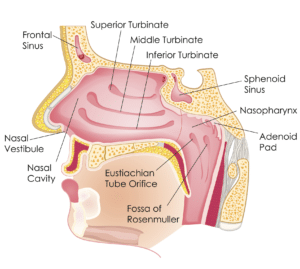
There are three primary types of turbinates on each side of the nasal cavity: the inferior turbinates, middle turbinates, and superior turbinates. The inferior turbinates are the largest and most commonly responsible for turbinate enlargement, nasal obstruction, and chronic breathing issues when they swell.
Because the turbinates exist on both sides of the nose, most patients experience symptoms on both the right and left, a condition known as bilateral turbinate hypertrophy. When this occurs, bilateral turbinate reduction may be recommended. This approach treats both sides of the nasal cavity during the same procedure, reducing excess turbinate tissue, improving airflow, and restoring balance between the two sides of the nose.
Who Is a Candidate to Have Inferior Turbinate Reduction Surgery?
Any person who has persistent turbinate enlargement or chronic turbinate swelling that has not responded to other treatments or medical management is a candidate for turbinate reduction surgery. These symptoms often include ongoing nasal obstruction, nasal blockage, difficulty breathing through the nose, chronic mouth breathing, snoring, and poor-quality sleep caused by blocked airways and reduced airflow through the nasal passages.
Patients with long-standing allergies, chronic or recurring sinus infections, vasomotor rhinitis, chronic swelling of the inferior turbinates, polyps, or a deviated septum that forces the nasal turbinates to enlarge are typical candidates who may benefit from turbinate reduction surgery. For many patients, reducing excess turbinate tissue helps correct breathing problems, restore space inside the nasal cavity, and improve airflow when the inferior turbinates no longer respond to nasal sprays or medication-based treatment options.
How Do Swollen Turbinates Affect Breathing?
When the turbinates become swollen, the enlarged turbinate tissue fills the limited space inside the nasal cavity, leaving less room for air to pass through the nasal passages. This causes nasal obstruction, nasal blockage, and the sensation that the nose feels blocked, leading to trouble breathing, chronic congestion, and other symptoms related to restricted airflow. Many patients will get “hooked” on over-the-counter decongestant nasal sprays because they can temporarily shrink the turbinates. These sprays constrict blood vessels inside the turbinate, briefly opening the airway. Unfortunately, this causes a rebound and worsening of the swelling. Our technique works like these nasal sprays, but it mechanically shrinks the turbinate by removing all of the swelling, similar to liposuction. It shrinks the excess tissue, helping the nasal passages open, restoring airflow, and allowing most patients to breathe normally again.
What Are the Symptoms of Swollen Turbinates?
When the turbinates enlarge, they literally fill the available space in the nasal cavity. The turbinates can swell from the inside of the nose all the way toward the middle, making contact with the septum, which leads to significant nasal obstruction and nasal blockage.
Patients with turbinate enlargement could experience some of the following symptoms:
- Feel as if the nose is completely blocked or notice that one side or the other is blocked
- Sinus Pressure
- Headache
- Mouth Breathing
- Snoring
- Chronic Congestion and persistent swelling
If a patient experiences chronic congestion that causes difficulty breathing through the nose, they should undergo an evaluation to determine whether turbinate swelling is the cause. Oral or topical decongestants may temporarily shrink the turbinates, but the symptoms quickly recur once the medication wears off because of rebound swelling. For many patients, long-term relief requires addressing the underlying turbinate enlargement, often through turbinate reduction or other treatment options that restore airflow and improve breathing. Combining turbinate reduction with allergy drops can provide long-lasting results.
Turbinate Reduction Patient Testimonial
“…Dr. Slaughter was the first ENT to address my deviated septum, enlarged turbinates that had me breathing through my mouth, and severe allergy issues. My surgery was quick and relatively painless…”
What Happens If I Don’t Have My Turbinates Reduced with Surgery?
Leaving your swollen turbinates untreated means you’ll have to continue to suffer through ongoing nasal obstruction, nasal blockages, and the chronic breathing difficulties caused by enlarged inferior turbinates. Without turbinate reduction, the persistent swelling and blocked airways can force you into constant mouth breathing, reduced airflow through the nasal passages, and worsen symptoms like snoring and poor-quality sleep. Your partner may also struggle with the increased snoring that often accompanies turbinate enlargement.
Over time, untreated turbinate enlargement may increase the risk of obstructive sleep apnea, a condition linked to serious health concerns. Many patients also notice reduced exercise tolerance, ongoing fatigue, and worsening congestion because the turbinate tissue continues to swell and narrow the nasal cavity. While nasal sprays or oral decongestants may offer you temporary relief, the swelling will quickly return once the medication wears off. For many patients, turbinate reduction surgery provides the long-term improvements needed to correct breathing problems and restore normal airflow.
How Are Turbinate Hypertrophy and a Deviated Septum Related?
A patient with a deviated nasal septum is more likely to experience turbinate hypertrophy or chronic turbinate enlargement. The septum is the divider between the right side of the nose and the left side of the nose, and when it becomes bent or crooked in a condition known as a deviated septum, it changes the airflow dynamics inside the nasal cavity. If your septum deviates to one side, this creates space for the turbinates to grow larger.
This enlargement of the nasal turbinates can lead to nasal obstruction, nasal blockage, and ongoing breathing difficulties. Over time, the turbinate tissue may continue to expand as it tries to regulate airflow, humidify air, and maintain a moist environment inside the nasal passages. For many patients, the combination of a deviated septum and turbinate hypertrophy results in chronic congestion, snoring, and blocked airways that may require turbinate reduction surgery or septoplasty to restore normal airflow.
How Do I Prepare for a Turbinate Reduction?
It’s a simple procedure. Preparing for turbinate reduction is easy and requires very little from the patient. This minimally invasive procedure is performed in our office under IV sedation. Detailed instructions are provided in advance. Upon arrival at the office, we instruct our patients to take four puffs of Afrin in each nostril to help open the nasal passages and reduce surface swelling. Our team will prepare you for IV sedation, and you will be comfortable and unaware during the procedure. The turbinate reduction procedure itself takes only a few minutes, is virtually pain-free, and allows you to resume normal activities the same day.
This straightforward preparation helps ensure the inferior turbinates are ready for treatment, allowing us to safely reduce excess turbinate tissue, improve airflow, and minimize bleeding during the procedure. For many patients, this quick process is the first step toward long-term relief from nasal obstruction, blocked airways, and chronic congestion.
The Turbinate Reduction Procedure
Turbinate reduction is a simple in-office procedure similar to liposuction. Under endoscopic guidance, a small puncture is made in the swollen turbinate, and the turbinate reduction is performed using a special instrument called a suction microdebrider. The procedure takes about five minutes and is performed under IV sedation.
We frequently combine turbinate reduction with balloon sinuplasty, or septoplasty.
How Long Does Turbinate Reduction Surgery Take?
Turbinate reduction surgery is an incredibly quick procedure, usually taking about five to 10 minutes to perform. This minimally invasive outpatient procedure is completed in our office on Renfert Way, with the patient comfortably under IV sedation. Because the treatment focuses on reducing excess turbinate tissue inside the nasal cavity, most patients experience improved airflow and relief from nasal obstruction once the swelling resolves.
What Is Recovery Like After Having Turbinate Reduction Surgery?
After turbinate reduction surgery, patients will typically have some remaining sedation for the rest of the day of the procedure. There is some mild bloody nasal discharge for approximately 24 hours, and some gradually improving congestion may occur over the next few weeks as the inferior turbinates heal. Typically, there is no requirement for any pain medication, and most patients can resume normal activities, including work, the very next day. As the healing process continues, airflow improves, and breathing becomes easier as the nasal passages open and the swelling subsides.
What Should I Avoid Doing After Turbinate Reduction Surgery?
Fortunately, there are very few restrictions after this procedure. Patients are asked to avoid bending, lifting, stooping, straining, and blowing their nose the day of the procedure to help control bleeding and protect the healing turbinate tissue. Normal activity can typically be resumed the following day, and most individuals return to work without difficulty. Because the turbinate reduction is minimally invasive, the risk of complications is low, and the healing process is generally smooth.
Will I Need Turbinate Reduction Treatment Again in the Future?
While turbinate reduction provides long-term relief for many patients, it is possible for a reduced turbinate to regrow, so the need for another surgery in the future cannot be completely ruled out. However, this is rare. To help prevent recurrence, we recommend allergy testing in our office and treating allergies with allergy drop therapy, which reduces the immune system’s response that contributes to turbinate enlargement. With proper management, most patients enjoy lasting improvements in airflow and breathing.
Speak with Our Doctors About Turbinate Reduction!
If you are interested in a turbinate reduction and would like more information, contact our office in Austin, TX today! Call (512) 601-0303 to schedule a consultation with our physicians.
Austin Turbinate Reduction Surgery — FAQs
What types of turbinate reduction procedures are available?
Although several turbinate reduction techniques exist, only one has proven to be both safe and effective over the long term. That technique is submucosal turbinate reduction using a suction microdebrider. This is the technique we use in our office. Not only is it the most effective technique, but it also does not result in “empty nose syndrome,” as turbinate resection may.
Can turbinate reduction change the shape of my nose?
Because turbinate reduction focuses only on internal turbinate tissue inside the nasal cavity, it does not alter the external nose shape. The procedure simply reduces swelling and excess tissue to relieve nasal obstruction and help the nasal passages open without affecting the overall appearance and uniqueness of your nose.
How long does it take for the turbinates to heal after surgery?
During the healing process, the inferior turbinates gradually shrink and stabilize over a few weeks, with most patients noticing improved breathing as swelling decreases and the nasal cavity regains normal airflow. Mild bleeding or congestion may occur early on but typically resolves quickly. Due to the minimally invasive nature of the procedure, you should feel well enough to resume normal activities like work and school the next day. Strenuous activities or any activity that requires bending, lifting, or straining should be put off until you are cleared by your provider.
Is turbinate reduction performed with local or general anesthesia?
Turbinate reduction is performed in our office under comfortable IV sedation using a suction microdebrider.
Can turbinate reduction help correct breathing problems caused by a deviated septum?
Yes, when a deviated septum causes turbinate enlargement, turbinate reduction surgery can help correct breathing problems by reducing blocked airways and restoring balance inside the nasal cavity. It’s often performed alongside septoplasty for optimal airflow.
Can turbinate reduction prevent empty nose syndrome?
Our technique for turbinate reduction preserves the essential function of the inferior turbinates, helping prevent complications such as empty nose syndrome by avoiding resection and maintaining a moist environment, healthy blood flow, and the nose’s ability to humidify the air.
What symptoms suggest I may need turbinate reduction therapy?
Patients experiencing any of the following symptoms should be evaluated for turbinate reduction surgery:
- Chronic swelling
- Persistent nasal obstruction
- Nasal blockage
- Trouble breathing
- Recurring congestion
- The feeling that the nose feels blocked despite nasal sprays or other treatments