
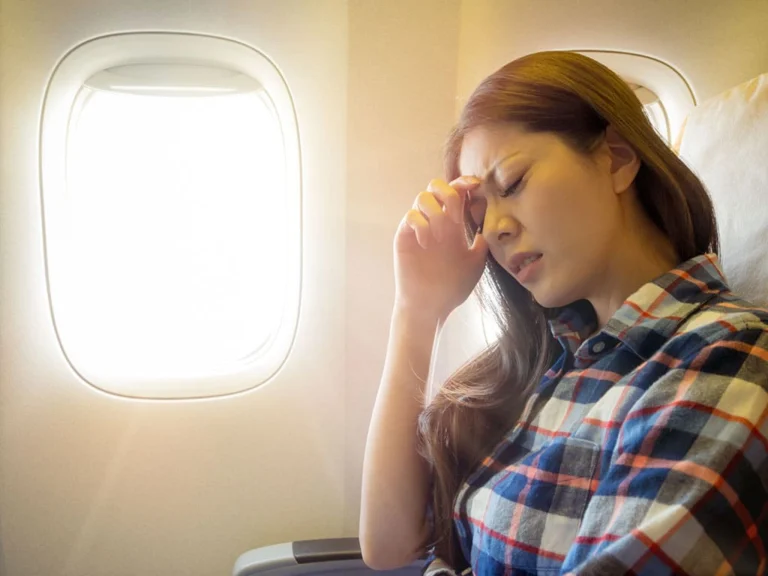
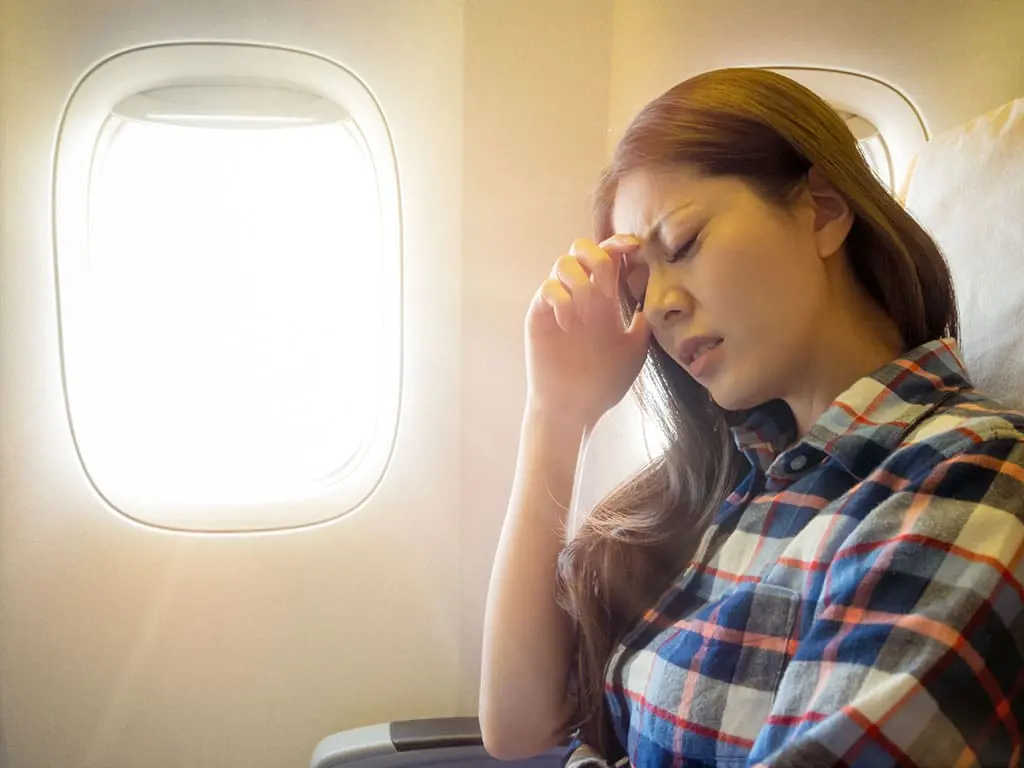
Flying during the travel season can be a rewarding experience. However, some patients (often those with a history of sinus problems) can find this a difficult and even painful experience because the sudden changes in cabin pressure can cause facial pain and pressure. This is called aerosinusitis.
How does aerosinusitis happen?
Sinuses are air-filled spaces that connect to the nasal cavity through small holes, called ostia. Normally, they produce mucus, which can be used to clear the nasal cavity of allergens and microorganisms. During the rapid pressure changes that occur during takeoff and landing, the air pressure in the sinuses may not be able to quickly equalize with the outside air pressure. This can cause the nasal cavity and the sinus linings to become inflamed, leading to facial pain and pressure.
If not treated, the sinus drainage pathways can become blocked and filled with mucus. Over time, these secretions can become infected and cause facial pain or pressure, postnasal drip, cough, and a reduced sense of smell.
What are risk factors for aerosinusitis?
Some structural issues with the nasal cavity can cause aerosinusitis. These include a deviated nasal septum, inflammation in the nose due to allergies, and narrowing of the sinus drainage pathways.
Dry and recycled air in the airplane cabin also contributes to this.
Prevention/Management of Aerosinusitis
- Stay Hydrated:
Keeping hydrated is important because it promotes thinner mucus, and by extension, keeps the nose comfortable. Minimizing alcohol during the flight, which can promote nasal dryness, is also helpful. - Use Saline Rinses:
Using nasal saline rinses before and during airplane travel keeps the lining of the nose moist, which again thins the mucus and allows the mucus to clear more readily. - Consider a Decongestant Spray:
You may also consider using a topical nasal decongestant, like Afrin, 30 minutes before the flight. This can reduce swelling inside the nose and keep the sinus pathways open.

Important Disclaimer: Afrin (oxymetazoline) and similar nasal sprays should not be used for long-term decongestion because they can cause damage to the tissue lining the nose, not to mention dependence and long-lasting nasal congestion.
- Address Underlying Issues:
If you have structural issues like a deviated septum or chronic sinus conditions, these may increase your risk of aerosinusitis. Our team at Sinus and Snoring Specialists can evaluate your individual situation and help you create a personalized plan to prevent and manage symptoms.
Schedule a Consultation

Interested in Balloon Sinuplasty? Contact Us Today to Get Started

If chronic sinus pressure, congestion, recurrent infections, or difficulty breathing through your nose continue to interfere with daily life, a more thorough evaluation may help identify the underlying cause. At Sinus & Snoring Specialists, our team focuses on detailed anatomical assessment and minimally invasive treatment options designed to improve long-term sinus function and nasal airflow.
To learn whether balloon sinuplasty may be appropriate for your condition, contact our Austin office at (512) 601-0303 or request a consultation online.
Planning a trip and worried about sinus pain? Schedule a consultation with one of our experts at Sinus & Snoring Specialists. We’ll help you fly comfortably with a personalized sinus care plan.

Call or Text: 512-601-0303 or request an appointment